In today’s modern lifestyle, many people spend hours seated at desks, in cars, or on couches. While sitting may feel harmless, prolonged inactivity can take a significant toll on the body, particularly on the hip flexors — the group of muscles that connect the hips to the pelvis and lower spine. Tight hip flexors are increasingly common, causing discomfort, poor posture, reduced mobility, and even lower back pain. The good news is that a targeted stretching routine can effectively eliminate hip flexor tightness, restoring flexibility, improving movement, and reducing discomfort.
Understanding why hip flexors tighten, and learning how to stretch them properly, is essential for anyone who spends much of their day sitting. This article outlines why hip flexor tightness occurs, the benefits of stretching, and a complete routine designed to target these crucial muscles safely and effectively.
Why Sitting Causes Hip Flexor Tightness
The hip flexors, which include the iliopsoas, rectus femoris, and sartorius muscles, are responsible for lifting the thigh toward the torso and stabilizing the pelvis during movement. In a standing or active position, these muscles engage naturally as we walk, run, climb stairs, and perform daily activities.
However, when sitting for extended periods, the hip flexors remain in a shortened, contracted position. Over time, this constant shortening leads to tightness, stiffness, and even muscle imbalance. This tightness can cause:

- Lower back pain: Tight hip flexors pull the pelvis forward, creating an exaggerated lumbar curve.
- Poor posture: A forward-tilted pelvis affects spinal alignment and posture.
- Reduced mobility: Limited hip extension makes walking, running, and squatting less efficient.
- Knee discomfort: Hip and pelvis misalignment can impact knee mechanics over time.
Understanding these consequences underscores the importance of incorporating regular stretching and mobility exercises into daily routines.
The Benefits of Stretching the Hip Flexors
Stretching the hip flexors provides a variety of physical and functional benefits. These include:
- Restoring range of motion: Lengthening tight muscles improves hip extension and rotation.
- Reducing pain: Proper stretching alleviates pressure on the lower back and pelvis.
- Enhancing athletic performance: Flexible hip flexors contribute to better running, squatting, and jumping mechanics.
- Improving posture: Stretching counteracts the forward tilt caused by prolonged sitting.
- Promoting blood flow: Active stretching increases circulation to the hip region, helping muscles recover and remain healthy.
While foam rolling and massage can temporarily relieve tension, stretching is essential for lasting flexibility improvements.
The Complete Hip Flexor Stretching Routine
This routine is designed to target all major hip flexor muscles and their supporting stabilizers. It can be performed daily or at least three to four times a week. Each exercise focuses on controlled, mindful movement, emphasizing proper form and gradual progression.

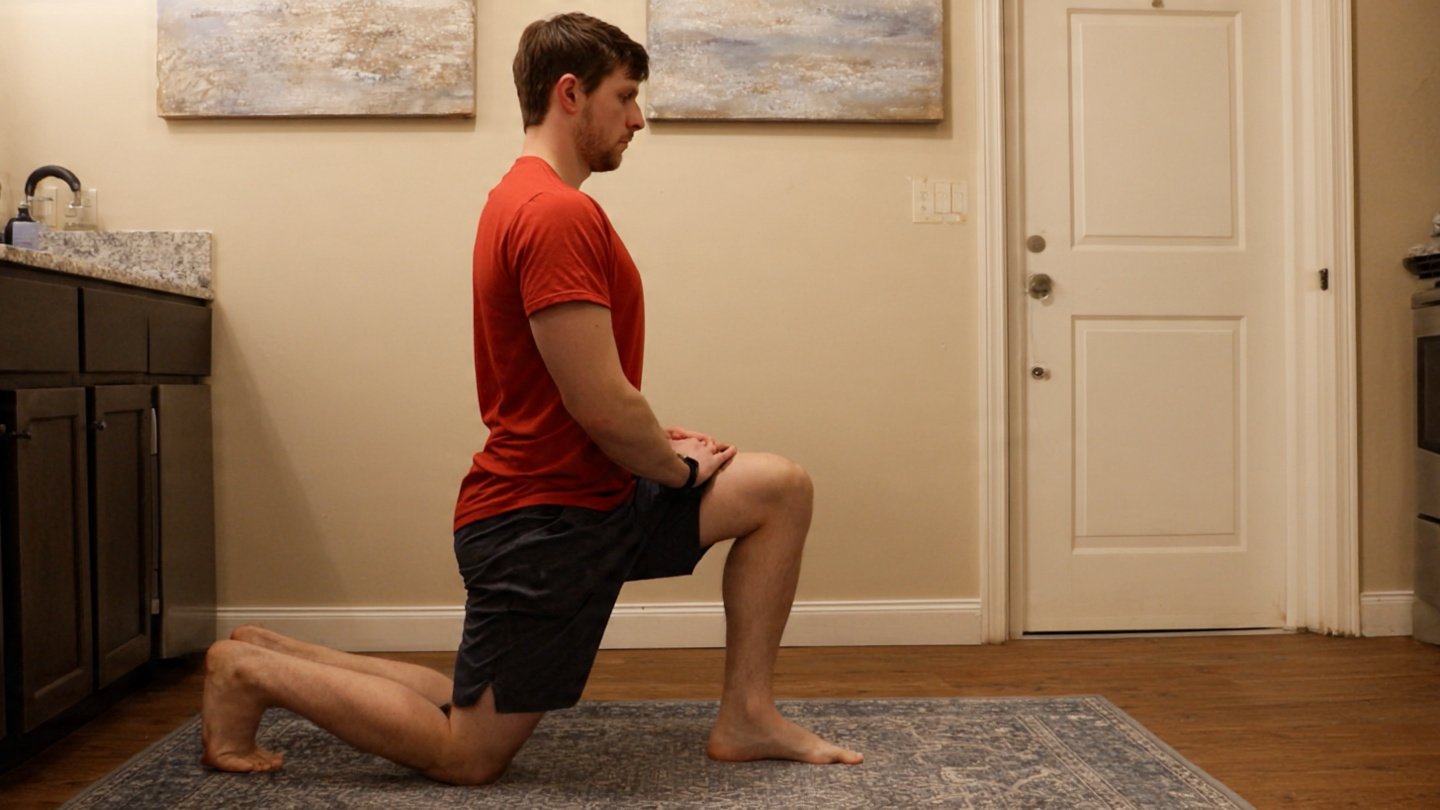
1. Low Lunge Hip Flexor Stretch
- Muscles targeted: Iliopsoas, rectus femoris
- How to perform:
- Step your right foot forward into a lunge position.
- Lower your left knee to the ground, ensuring the shin is behind the hip.
- Tilt your pelvis slightly backward while keeping your torso upright.
- Engage your glutes to deepen the stretch.
- Hold for 30–60 seconds and repeat on the opposite side.
Tip: Keep your front knee directly above the ankle and avoid leaning forward excessively.
2. Standing Quad Hip Flexor Stretch
- Muscles targeted: Rectus femoris
- How to perform:
- Stand upright and shift weight to your left leg.
- Bend your right knee, bringing your heel toward your glutes.
- Grab your ankle with your right hand and gently pull it closer while keeping knees aligned.
- Tuck your pelvis slightly under to feel the stretch in the front of the hip.
- Hold for 30 seconds on each leg.
Tip: Avoid arching your lower back; the stretch should be felt at the front of the hip, not the spine.
3. Pigeon Pose (Modified for Tight Hips)
- Muscles targeted: Hip flexors, glutes, piriformis
- How to perform:
- Begin in a plank or downward-facing dog position.
- Bring your right knee forward and place it behind your hands. Angle the shin slightly.
- Extend your left leg straight back, keeping the hips square.
- Lean forward over the front leg if comfortable.
- Hold for 30–60 seconds, then switch sides.
Tip: If the traditional pigeon is too intense, place a cushion or folded blanket under your front hip for support.
4. Bridge with Hip Extension Focus
- Muscles targeted: Hip flexors (indirectly), glutes, hamstrings
- How to perform:
- Lie on your back with knees bent and feet flat on the floor.
- Lift your hips toward the ceiling, squeezing your glutes.
- Focus on opening the front of the hips while holding the bridge.
- Hold for 15–30 seconds, repeat 3–5 times.
Tip: Engaging the glutes actively counteracts hip flexor tightness and promotes balanced strength.

5. Butterfly Stretch with Forward Lean
- Muscles targeted: Inner thigh and hip adductors (supporting hip mobility)
- How to perform:
- Sit on the floor with the soles of your feet together.
- Pull your heels close to your groin.
- Gently press your knees toward the floor.
- Lean forward slightly to enhance the hip stretch.
- Hold for 30–60 seconds.
Tip: Keep your back straight, avoid hunching over to prevent lower back strain.
6. Dynamic Hip Flexor Stretch (Walking Lunge with Rotation)
- Muscles targeted: Hip flexors, obliques, stabilizers
- How to perform:
- Step forward into a lunge position.
- Rotate your torso toward the front leg.
- Return to standing and step forward with the other leg, repeating the rotation.
- Perform 8–12 reps on each side.
Tip: This dynamic movement combines stretching and functional mobility, improving balance and coordination.
Best Practices for Maximum Effectiveness
- Consistency is key: Daily or near-daily stretching provides the best results.
- Warm-up first: Even 3–5 minutes of light walking or marching in place can enhance flexibility.
- Focus on posture: Correct alignment ensures the stretch targets the hip flexors rather than the lower back.
- Breathe deeply: Slow, controlled breathing helps muscles relax and increases the stretch’s effectiveness.
- Listen to your body: Stretching should create tension, not pain. Mild discomfort is normal, sharp pain is not.
- Combine with strengthening: Tight hip flexors are often paired with weak glutes. Incorporate glute bridges, squats, and deadlifts to restore balance.
Lifestyle Adjustments to Prevent Tightness
In addition to stretching, modifying daily habits can prevent hip flexor tightness from recurring:
- Take frequent breaks: Stand up, walk, or perform a quick stretch every 30–60 minutes.
- Adjust seating posture: Sit with hips at 90 degrees, feet flat, and lower back supported.
- Use a standing desk: Alternating between sitting and standing reduces chronic shortening of hip flexors.
- Incorporate movement into routines: Activities like yoga, swimming, and walking naturally stretch and strengthen hip flexors.
Even small changes, when performed consistently, can dramatically reduce hip discomfort over time.

Conclusion
Hip flexor tightness from prolonged sitting is a common, often overlooked problem with wide-ranging effects on posture, mobility, and overall comfort. While modern life may demand hours of sitting, the good news is that a targeted stretching routine can restore flexibility and alleviate discomfort.
The combination of low lunges, quad stretches, pigeon poses, bridges, butterfly stretches, and dynamic lunges addresses all major hip flexor muscles and their supporting structures. By integrating these stretches into a daily routine and coupling them with proper posture and movement habits, individuals can counteract the negative effects of sitting.
As we navigate increasingly sedentary lifestyles, proactive care of the hip flexors is essential. With the right approach, tightness and pain can be minimized, mobility improved, and the body prepared for an active, healthy life. By dedicating just 10–15 minutes a day to this stretching routine, you can reclaim freedom of movement, prevent long-term issues, and maintain the balance between modern convenience and physical well-being.