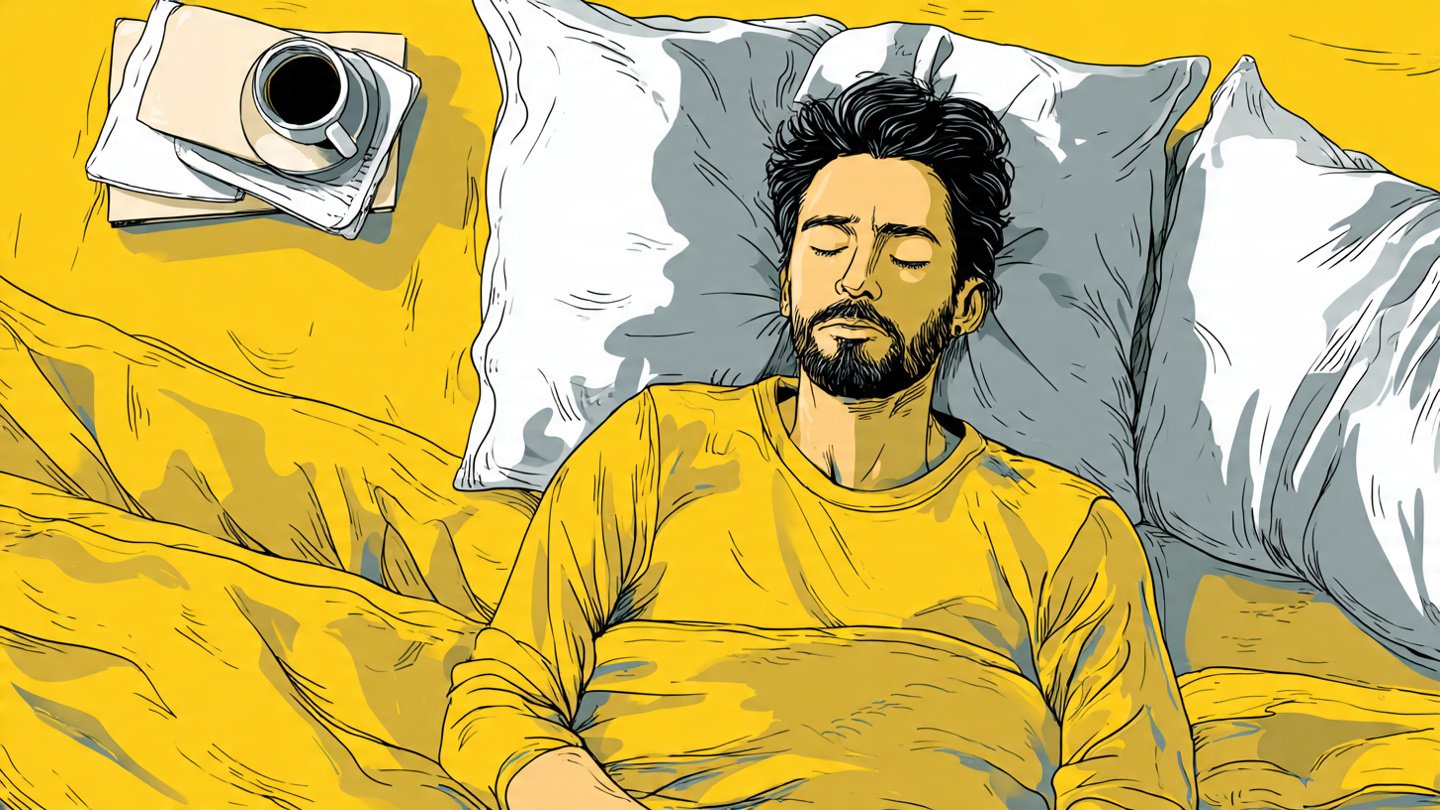
Waking up refreshed can feel like a luxury in today’s always-on world. For many people, mornings begin with grogginess, heavy eyelids, and the feeling that sleep was never quite enough—no matter how many hours they spent in bed. Yet sleep researchers and behavioral psychologists agree on one surprising truth: feeling well-rested has less to do with how long you sleep and more to do with what you do in the hour before you go to bed.
According to growing evidence from sleep science, people who consistently follow one simple evening habit tend to wake up clearer-headed, more energized, and significantly more rested than those who don’t. This habit doesn’t involve expensive supplements, strict schedules, or extreme lifestyle changes. Instead, it centers on something far more powerful and overlooked: intentional mental disengagement before sleep.
The Hidden Reason You Wake Up Tired
Most people assume that sleep quality is determined by physical exhaustion. In reality, mental overstimulation is one of the leading causes of unrefreshing sleep.
Your brain doesn’t automatically shut off just because you lie down. If it’s still processing emails, social media, unresolved conversations, or tomorrow’s to-do list, your nervous system remains in a semi-alert state. This prevents your body from entering the deeper stages of sleep where real restoration occurs.
As a result, you may technically sleep for seven or eight hours—yet wake up feeling as if you barely rested at all.
The Evening Habit That Changes Everything
The habit that consistently separates well-rested people from perpetually tired ones is this:
They create a deliberate mental “off-ramp” before bed.
In practical terms, this means setting aside 15–30 minutes each evening for a low-stimulation, screen-free wind-down ritual that signals to the brain that the day is complete.

It’s not about going to bed earlier.
It’s about ending the day properly.
What Intentional Mental Disengagement Looks Like
This habit doesn’t have one rigid form. People who benefit from it adapt it to their personalities and lifestyles, but the core principles remain the same.
Common examples include:
- Writing down tomorrow’s tasks to clear mental clutter
- Reading a physical book (not a phone or tablet)
- Light stretching or gentle yoga
- Listening to calm music or ambient sounds
- Practicing slow breathing or brief meditation
- Sitting quietly with dim lighting and no distractions
The key is low stimulation and predictability. The brain learns to associate this routine with safety, completion, and rest.
Why This Habit Works So Well
From a neurological perspective, this evening ritual helps shift your body out of “sympathetic” mode—the fight-or-flight state—and into the parasympathetic state, which governs rest, digestion, and recovery.
When you disengage intentionally:
- Cortisol levels decrease
- Heart rate slows
- Brain waves shift toward alpha and theta states
- Melatonin production increases naturally
This creates the ideal internal environment for deep, restorative sleep.
People who skip this transition often fall asleep abruptly while their nervous system is still overstimulated, leading to fragmented sleep and poor recovery—even if they don’t consciously wake up during the night.

The Screen Factor Most People Overlook
One reason this habit is so powerful is that it almost always involves disconnecting from screens.
Phones, tablets, and televisions do more than emit blue light. They constantly feed the brain novelty, social signals, and emotional triggers. Even “relaxing” scrolling keeps the mind alert and reactive.
Studies show that people who stop using screens at least 30 minutes before bed:
- Fall asleep faster
- Spend more time in deep sleep
- Wake up feeling more refreshed
It’s not the content alone—it’s the cognitive engagement that prevents mental shutdown.
Consistency Matters More Than Perfection
One of the most encouraging aspects of this habit is that it doesn’t require perfection. People who benefit most aren’t rigid—they’re consistent.
Even on busy evenings, they maintain some version of the routine:
- Five minutes of breathing instead of twenty
- A few pages of reading instead of a full chapter
- A short journal entry instead of a full reflection
The brain responds more to regularity than duration.
Over time, this consistency trains your nervous system to downshift more easily, making restful sleep feel almost automatic.

The Morning Payoff
People who follow this evening habit often report noticeable changes within just a few days.
Common improvements include:
- Waking up without an alarm or with less resistance
- Reduced morning brain fog
- More stable energy throughout the day
- Improved mood and emotional regulation
- Fewer cravings for caffeine or sugar
Interestingly, many report needing less sleep to feel rested—not because they sleep less, but because the sleep they get is deeper and more efficient.
Why This Habit Is Especially Important Today
Modern life offers very few natural boundaries. Work bleeds into evenings. Notifications arrive around the clock. Entertainment is endless. Without intentional closure, the brain never receives a clear signal that the day is over.
This evening habit acts as a psychological “full stop.”
It tells your mind:
- You don’t need to solve anything right now
- Tomorrow has its own space
- Rest is safe and allowed
In a world of constant stimulation, this simple ritual becomes a powerful form of self-regulation.
Why Some People Resist This Habit
Ironically, the people who need this habit most often resist it the strongest.

Common objections include:
- “I don’t have time.”
- “I relax by scrolling.”
- “I fall asleep fine anyway.”
But falling asleep isn’t the same as sleeping well.
Once people try intentional disengagement for a week, resistance usually disappears—replaced by a noticeable improvement in how they feel each morning.
How to Start Tonight
You don’t need to overhaul your evening. Start small.
Tonight, try this:
- Pick a fixed time 30 minutes before bed
- Turn off all screens
- Dim the lights
- Choose one calming activity
- Repeat tomorrow
That’s it.
No apps. No trackers. No pressure.
The Takeaway
People who wake up feeling truly rested don’t rely on luck or perfect conditions. They rely on a simple, repeatable habit that gives their brain permission to shut down.

They end the day on purpose.
By creating a gentle mental transition each evening, they allow sleep to do what it’s meant to do: restore, repair, and reset.
In the end, better mornings don’t start in the morning at all—they start the night before.