Gardeners have long relied on traditions passed down through generations, often combining practical knowledge with folklore and ritual. One curious practice that has persisted in gardens across Europe and North America is the burial of a rusty nail at the base of rose bushes. At first glance, this might seem like an old wives’ tale or a quaint superstition, but both historical accounts and modern horticultural science reveal that there is more to this practice than meets the eye. Today, gardeners are rediscovering why this simple, seemingly odd technique may have had a practical effect on rose growth and health—and why it continues to spark debate among enthusiasts.
A Tradition Rooted in Folk Wisdom
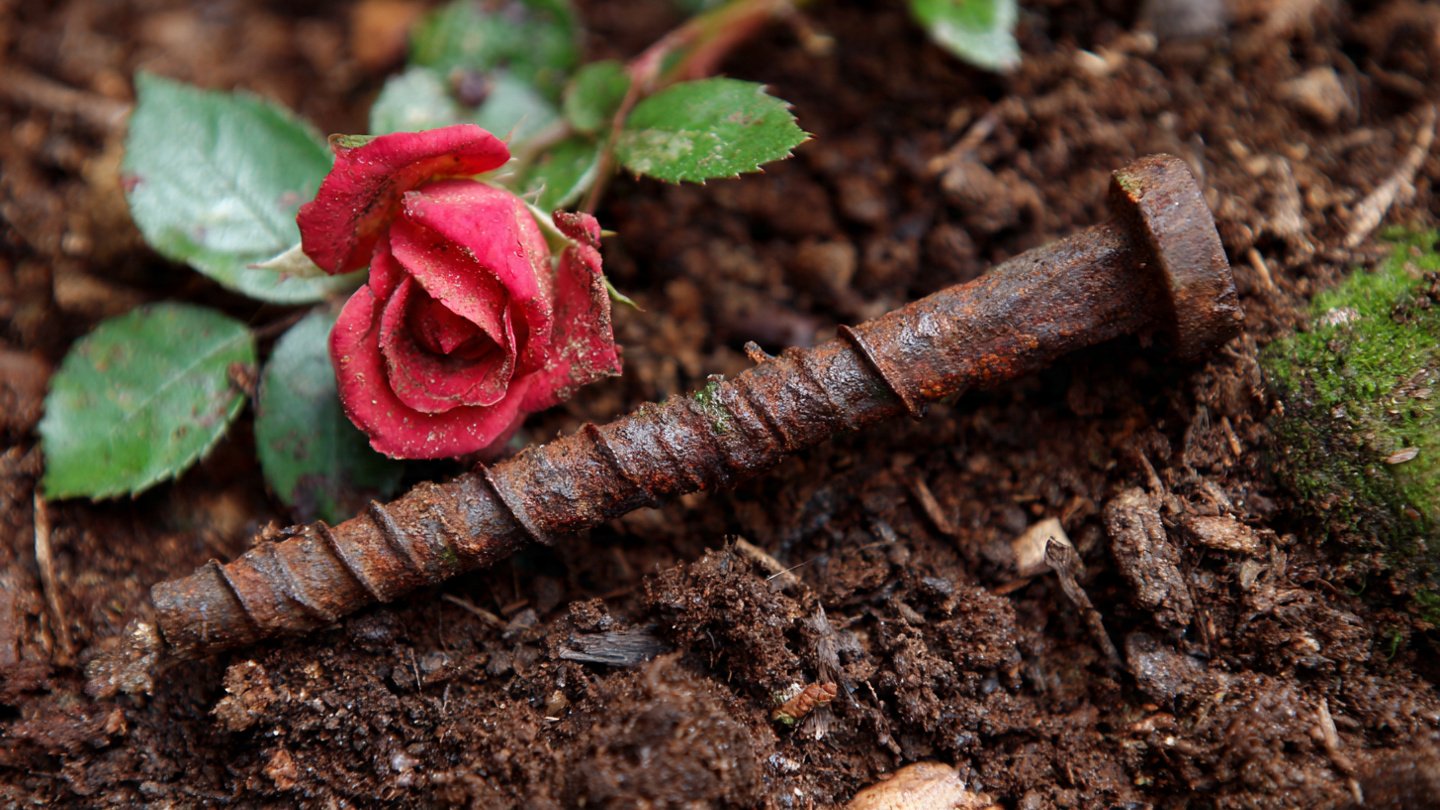
In the early 19th and 20th centuries, gardening manuals often included advice that blended practical horticulture with elements of superstition. Roses, being one of the most cherished ornamental plants, inspired countless rituals intended to improve their growth, bloom, and resistance to disease. One such ritual involved taking a rusty iron nail and burying it near the roots of a rose bush. Gardeners would sometimes add other materials as well, like ash, crushed eggshells, or coins, believing these objects imbued the soil with vitality or offered protection against pests.
The reasoning behind the practice was twofold. First, iron was thought to strengthen the plant itself. Second, some gardeners believed that the nail symbolically warded off disease and evil spirits, preventing blight or wilting. While the symbolic aspect may have been more relevant in folklore, there are surprising ways in which the presence of iron in the soil can benefit roses—offering a practical explanation for why this old-time technique endured.
The Role of Iron in Rose Health

Iron is an essential micronutrient for all plants, including roses. It plays a crucial role in photosynthesis, helping plants convert sunlight into energy. Iron is also a key component of enzymes that drive metabolic processes and support the development of chlorophyll—the pigment that gives leaves their green color. Without sufficient iron, roses may display symptoms of chlorosis, where leaves turn yellow while veins remain green, leading to weakened plants and reduced flowering.
In many soils, iron exists in forms that are not easily absorbed by plants, particularly in alkaline or sandy soils. By burying a rusty nail—a slow-releasing source of iron—gardeners may have inadvertently improved the availability of this nutrient in the immediate root zone. Over time, the iron in the nail oxidizes, releasing tiny amounts of soluble iron into the surrounding soil, which the rose roots can absorb. This slow release provides a subtle boost to plant health without the risk of over-fertilization that can occur with commercial iron supplements.
Historical Evidence and Gardening Manuals
Several historical gardening texts reference the use of iron near roses. For example, a 19th-century British gardening manual noted that placing a piece of iron in the soil around roses “encourages deep green foliage and robust growth.” Similarly, American horticultural guides from the early 20th century recommended burying nails or iron scraps near rose roots to combat nutrient deficiencies. Although these manuals often presented the advice alongside folklore explanations, modern science has confirmed that iron supplementation can indeed benefit roses in iron-deficient soils.
It is worth noting that gardeners did not always have precise tools to test soil chemistry or nutrient levels. The nail method was a practical, low-cost way to address what they observed: roses that received iron seemed healthier, produced more blooms, and resisted leaf yellowing better than those that did not. In this sense, the ritual was less about superstition and more about empirical observation passed down over generations.

How to Use the Nail Technique Today
Modern gardeners who wish to try this old-time technique should consider a few practical points:
- Choose the right nail or iron source: A simple, untreated iron nail works best. Avoid nails coated with paint or zinc, as chemicals can leach into the soil and harm the plant.
- Placement: Bury the nail near the base of the rose bush, close to the root zone but not touching the main stem. This allows the iron to gradually diffuse into the surrounding soil where roots can absorb it.
- Depth: A depth of about 4–6 inches is usually sufficient. This ensures that the nail remains in contact with moist soil, which promotes slow oxidation.
- One nail per plant: A single nail is generally enough. Using multiple nails is unnecessary and does not significantly speed up iron absorption.
- Patience: The benefits of this method are gradual. Iron from a rusty nail releases slowly, so improvements in leaf color and plant vigor may take weeks or months to become noticeable.
Other Traditional Practices with Similar Principles
Burying nails is part of a broader set of traditional gardening techniques aimed at enriching the soil and supporting plant health. For example:
- Ash or charcoal: Wood ash was often buried near plants to provide potassium and improve soil structure.
- Crushed eggshells: A source of calcium, eggshells help strengthen cell walls and prevent blossom-end rot in certain plants.
- Copper coins: Some gardeners believed that copper helped deter fungal infections.
These practices all reflect an intuitive understanding of plant nutrition, long before modern fertilizers and soil tests became commonplace. While not all of the folklore elements hold scientific merit, many of the underlying practices, like providing trace minerals, have real benefits.

The Debate Among Modern Gardeners
Today, opinions are divided on the effectiveness of burying nails near roses. Some gardeners swear by it, noting greener leaves, stronger stems, and more abundant blooms. Others argue that commercial fertilizers and modern soil amendments make the technique obsolete, offering more precise and immediate results.
However, many experts suggest that there is little downside to trying the nail method, provided that proper care is taken to avoid contaminated or coated nails. Because iron is a micronutrient that roses need, and because the slow-release effect of a rusty nail is harmless in small quantities, the practice can be seen as a complementary approach rather than a replacement for standard fertilization.
Combining Old and New Techniques
For gardeners seeking optimal results, combining traditional methods like the rusty nail with modern horticultural practices can be effective. Soil testing can identify deficiencies, allowing for targeted fertilization, while iron from nails or other natural sources supports gradual supplementation. Mulching, regular watering, and proper pruning further enhance rose health. In this way, the wisdom of old-time gardeners complements contemporary science, creating a holistic approach to cultivating beautiful, resilient roses.

Cultural and Symbolic Significance
Beyond practical benefits, the act of burying a nail carries symbolic meaning. In folklore, iron was believed to repel negative energy, protect plants from disease, and encourage growth. Roses themselves are symbols of beauty, love, and vitality, and the ritual of placing iron at their base was often seen as a gesture of care and protection. Even today, gardeners may find a sense of connection to past generations by incorporating such traditions into their planting routines.
Conclusion
The practice of burying a rusty nail at the base of rose bushes may seem quaint or mysterious at first, but it has both historical and scientific foundations. Old-time gardeners discovered that iron, even in small, slow-releasing forms, can improve the health and appearance of roses. Modern horticultural research supports this, confirming that iron is essential for chlorophyll production and overall plant vigor.
Whether motivated by tradition, curiosity, or a desire to support plant health naturally, gardeners who try this technique may find that their roses flourish more vividly, with deeper green leaves, stronger stems, and more abundant blooms. Combining this old practice with contemporary gardening knowledge allows both amateur and professional gardeners to honor the wisdom of the past while benefiting from modern science.

In the end, the rusty nail is more than just a piece of metal; it is a bridge between generations of gardeners, a reminder that sometimes the simplest tools and techniques can yield surprising results. By burying a nail at the base of a rose bush, one participates in a centuries-old tradition that is as practical as it is symbolic—a small gesture that nourishes both plants and the enduring spirit of gardening.