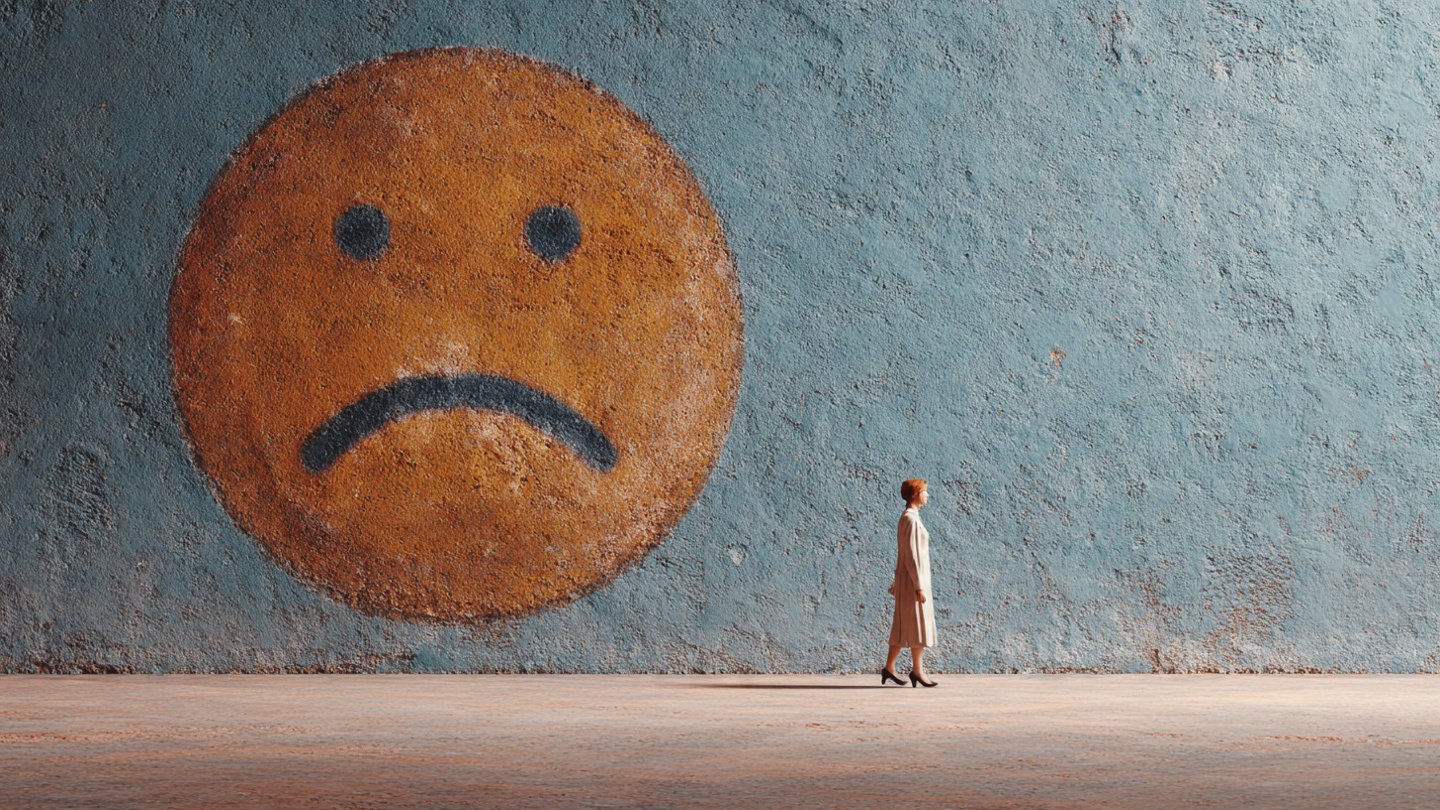
Happiness often feels like something we should either have or not have—an almost fixed personal trait. Yet decades of psychological and economic research tell a more complex story. Happiness rises and falls across the lifespan in surprisingly consistent patterns, shaped by biology, expectations, social roles, and life events. One of the most striking findings to emerge from modern science is that happiness tends to dip at a specific age, regardless of culture, income, or background.
So, is there really an age when happiness falters? And if so, does that mean it’s “goodbye to happiness”? According to researchers, the answer is more nuanced—and more hopeful—than it first appears.
The U-Shaped Curve of Happiness
One of the most robust findings in happiness research is the U-shaped curve of life satisfaction. Large-scale studies across dozens of countries consistently show that happiness is relatively high in youth, declines through early and middle adulthood, reaches a low point, and then rises again later in life.
This pattern has been observed in:
- Europe
- North America
- Asia
- Latin America
- Developing and developed economies alike
Despite cultural differences, the curve remains remarkably similar.
The Age Happiness Often Hits Its Lowest Point
According to multiple longitudinal studies in psychology and economics, happiness tends to reach its lowest point between ages 45 and 55, with many studies clustering around the early to mid-40s.
This phenomenon is often referred to as the midlife dip.
Importantly, this dip appears even when researchers control for:

- Income
- Employment status
- Marital status
- Physical health
- Education level
In other words, it’s not simply about external circumstances going wrong—it’s something deeper and more universal.
Why Happiness Declines in Midlife
Scientists point to several overlapping factors that converge during midlife, creating a perfect storm for reduced happiness.
1. The Gap Between Expectations and Reality
In early adulthood, people are fueled by possibility. There is a strong sense that life can still turn out in many different ways. By midlife, that sense narrows.
Psychologists call this the expectation-reality gap.
By your 40s:
- Many major life choices are locked in
- Career paths feel harder to change
- Unfulfilled dreams become more visible
- Comparison with peers intensifies
It’s not that life is objectively worse—it’s that people become more aware of what didn’t happen.
2. Peak Responsibility, Minimal Reward
Midlife is often the period of maximum responsibility:
- Careers are demanding
- Financial obligations are highest
- Children may still be dependent
- Aging parents may require care
At the same time, novelty and recognition often decline. Promotions slow. Praise becomes rare. Life becomes more about maintenance than growth.

Neuroscience research suggests that prolonged stress without clear rewards suppresses dopamine activity, a key neurotransmitter linked to motivation and pleasure.
3. The Biological Factor
Biology plays a role as well.
During midlife:
- Energy levels naturally decline
- Sleep quality often worsens
- Hormonal changes affect mood and resilience
These changes are gradual, but they can subtly reduce emotional well-being. The body is no longer as forgiving, and recovery—physically and mentally—takes longer.
4. Time Becomes Finite
One of the most psychologically significant shifts of midlife is the growing awareness of time.
In youth, time feels abundant. In midlife, people begin to perceive time as limited. This awareness can trigger existential questioning:
- “Is this all there is?”
- “Have I lived the life I wanted?”
- “What do I do with the years I have left?”
This shift doesn’t automatically cause unhappiness, but it does increase emotional intensity and self-evaluation.
Is This Dip Inevitable?
The midlife dip is common—but it is not destiny.

Not everyone experiences it in the same way, and some people barely notice it at all. Factors that reduce its severity include:
- Strong social relationships
- Realistic expectations
- Psychological flexibility
- A sense of meaning beyond achievement
What science emphasizes is probability, not certainty.
The Surprising Return of Happiness Later in Life
Here’s the part that often surprises people: happiness doesn’t just stabilize after midlife—it often increases.
Studies show that people in their 60s, 70s, and even 80s frequently report higher life satisfaction than those in midlife.
Why?
1. Emotional Regulation Improves With Age
Older adults tend to:
- Worry less about what others think
- Focus more on meaningful relationships
- Let go of unattainable goals
Psychologists call this emotional selectivity. As time feels limited, people invest their emotional energy more wisely.
2. Acceptance Replaces Striving
In later life, many people shift from constant striving to acceptance. This doesn’t mean giving up—it means redefining success.

Instead of asking, “What can I become?” the question becomes, “What do I value now?”
This shift is strongly associated with greater peace and contentment.
3. Perspective Brings Gratitude
Having lived through setbacks, losses, and challenges, older adults often develop a broader perspective. Difficult experiences are integrated rather than resisted.
Research shows that gratitude increases with age, and gratitude is one of the strongest predictors of happiness.
What Midlife Unhappiness Is Really Telling Us
Rather than viewing the midlife dip as a failure, many psychologists see it as a developmental signal.
It’s the mind’s way of asking:
- Are your values still aligned with your life?
- Are you living on autopilot?
- Are you prioritizing what actually matters?
In this sense, the dip can be a turning point rather than a decline.
Practical Ways to Navigate the Dip
Science suggests several strategies that help buffer the midlife happiness decline:

- Shift from outcome goals to meaning-based goals
Focus less on external success and more on activities that feel intrinsically valuable. - Reduce social comparison
Comparison intensifies dissatisfaction during midlife. Limiting it improves well-being. - Invest in relationships
Strong social bonds consistently predict happiness across all ages. - Accept change rather than resist it
Psychological flexibility is one of the strongest protective factors against unhappiness. - Redefine success
Let go of outdated definitions of achievement that no longer serve you.
Goodbye to Happiness—or a New Chapter?
So, is midlife the age when happiness disappears?
Science says no.
Happiness doesn’t vanish—it changes form. What once came from growth, novelty, and ambition begins to shift toward meaning, connection, and acceptance.
The dip in midlife is not the end of happiness. It’s often the transition point between two different kinds of well-being.
Understanding this can make all the difference. Instead of panicking when happiness falters, we can recognize it as part of a larger emotional arc—one that, for many people, leads not to decline, but to a quieter, deeper, and more resilient form of happiness.
In that sense, midlife isn’t where happiness says goodbye.