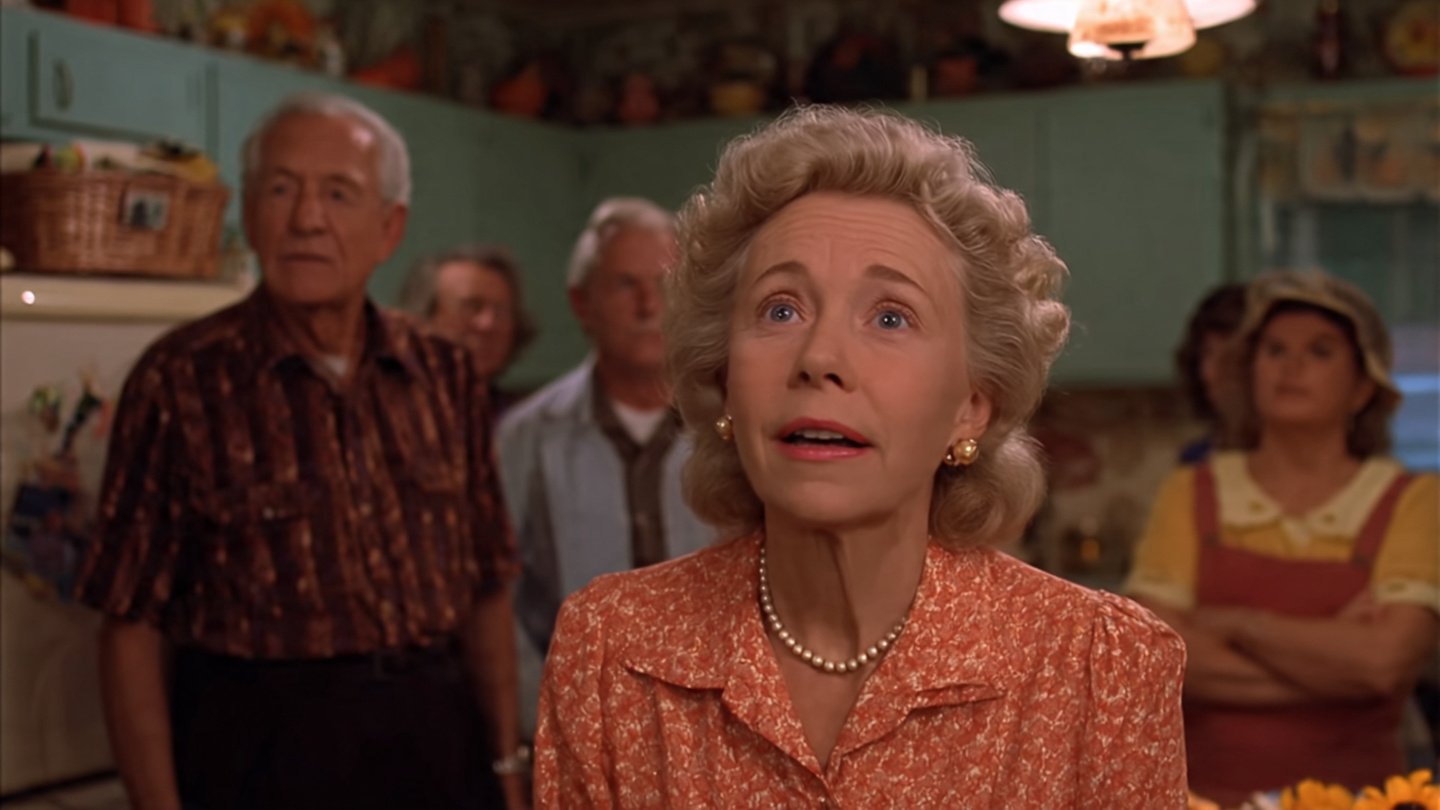
Memory has a way of surprising us. You might forget where you left your glasses five minutes ago, yet vividly recall the smell of chalk in a classroom from 60 years earlier or the exact song playing on the radio during a long summer drive. This isn’t a contradiction — it’s how the brain works.
Psychologists who study aging and cognition have long noted that long-term autobiographical memory often remains remarkably strong well into old age, while short-term recall tends to decline. In fact, remembering specific, detailed moments from decades ago is often a sign of a well-preserved memory system.
If you can clearly recall many of the moments below — not just vaguely, but with sensory details and emotional clarity — researchers say your memory may be sharper than average for someone in their 70s.
Why Old Memories Stick So Well
Before diving into the moments themselves, it helps to understand why early-life memories are so resilient.
Neuroscientists describe something called the “reminiscence bump” — a phenomenon where memories from adolescence and early adulthood (roughly ages 10 to 30) are recalled more vividly and more frequently than memories from other life periods. These years are filled with firsts, emotional intensity, and identity formation, all of which strengthen memory encoding.
When memories are emotionally charged, repeated, or personally meaningful, they become deeply embedded in the brain.
1. The First Time You Realized You Were No Longer a Child
This isn’t tied to a specific date, but most people remember a moment — or a realization — when childhood innocence faded.

It might have been overhearing an adult conversation, understanding financial stress for the first time, or recognizing that parents didn’t have all the answers. If you remember where you were, how you felt, and what changed internally, that level of emotional recall suggests strong autobiographical memory.
2. Your Childhood Home in Striking Detail
Can you mentally walk through the house you grew up in? Not just the layout, but:
- The texture of the walls
- The smell of the kitchen
- The sound of doors or floorboards
- Where light entered certain rooms
Being able to reconstruct a long-gone environment with sensory detail is a hallmark of robust long-term memory and spatial recall.
3. A Major World Event You First Learned About as a Young Adult
Most people in their 70s vividly remember hearing about a defining global event — whether it was a political assassination, the first moon landing, the start or end of a war, or a national tragedy.
If you can recall how you heard the news, who told you, what you were doing, and your emotional reaction, psychologists would classify this as a “flashbulb memory,” a type of memory often preserved even when other cognitive abilities decline.
4. Your First Job — Especially the Small Details
Many older adults remember their first job not as a summary, but as a series of snapshots:
- The smell of the workplace
- The feeling of receiving the first paycheck
- Nervousness on the first day
- The clothes worn or the commute taken
If those details come back easily, it suggests strong episodic memory — the system responsible for recalling specific personal experiences.

5. The First Time You Fell in Love (or Thought You Had)
Early romantic experiences tend to be emotionally intense, which makes them powerful memory anchors.
If you remember not just the person, but the anticipation, confusion, excitement, or heartbreak — perhaps even exact conversations or locations — your emotional memory processing has aged well.
Interestingly, psychologists note that people with preserved emotional memory often retain empathy and emotional intelligence longer into old age.
6. A Song That Instantly Takes You Back
Music is one of the strongest memory triggers known to science. If a song from decades ago instantly brings back:
- A specific place
- A specific person
- A distinct phase of your life
your brain is efficiently linking auditory cues to autobiographical memory networks.
Researchers frequently use music to stimulate memory in older adults — and those who respond strongly tend to have better overall cognitive resilience.
7. A Moment of Fear or Danger You Never Forgot
Moments involving fear — accidents, near-misses, emergencies — are often remembered with exceptional clarity due to the brain’s survival mechanisms.

If you remember:
- The physical sensations
- The sequence of events
- The emotions afterward
even decades later, it indicates that your memory consolidation processes were strong and remain accessible.
8. A Teacher, Mentor, or Authority Figure Who Left a Mark
Many people can still picture a specific teacher or mentor from their youth — their voice, expressions, mannerisms, and lessons.
Remembering not only who they were but why they mattered reflects strong narrative memory, the ability to link facts with meaning. This kind of memory is often better preserved in cognitively healthy aging.
9. The Day You Realized Time Was Moving Faster
This is a surprisingly common memory. Many adults recall a moment — often in midlife — when they became aware that years seemed to pass more quickly than before.
If you remember where you were, what triggered the thought, and how it felt emotionally, it shows an ability to recall abstract, reflective experiences — a higher-level cognitive function.
10. A Seemingly Ordinary Day That Still Stands Out
Not all powerful memories are dramatic. Some of the strongest long-term memories are of ordinary days that felt meaningful for reasons that only make sense in hindsight.

It could be:
- A quiet afternoon
- A routine walk
- A casual conversation
If such moments remain vivid decades later, psychologists see this as evidence of deep encoding — the brain’s ability to store experiences with personal significance rather than surface detail alone.
What Remembering These Moments Really Means
Remembering these moments doesn’t mean your memory is perfect, or that you’ll never forget names or appointments. Normal aging affects processing speed and short-term recall more than deep autobiographical memory.
Experts emphasize that memory strength is not about quantity, but quality. The ability to access detailed, emotionally rich memories from long ago is a strong indicator of cognitive health.
How to Keep Memory Sharp as You Age
Research suggests several habits support long-term memory preservation:
- Staying socially engaged
- Revisiting memories through storytelling or writing
- Listening to music from different life stages
- Learning new skills
- Staying physically active
Interestingly, reflecting on past memories — especially by sharing them — helps reinforce neural pathways and keep them accessible.
Final Thoughts: Memory as a Living Archive
If many of these moments came back to you clearly, that’s not just nostalgia — it’s evidence of a mind that has remained deeply engaged with life.

Memory isn’t a filing cabinet; it’s a living system shaped by emotion, meaning, and attention. The fact that your mind can still travel decades into the past with clarity suggests resilience, richness, and depth.
And perhaps most importantly, it reminds us that a sharp memory isn’t just about remembering facts — it’s about remembering being human.